FDM 3D printing — bespoke technical plastic parts

PLA, PETG, ASA, TPU, PA, carbon fibre · parts up to 500 × 500 × 500 mm · delivery across France and Europe.

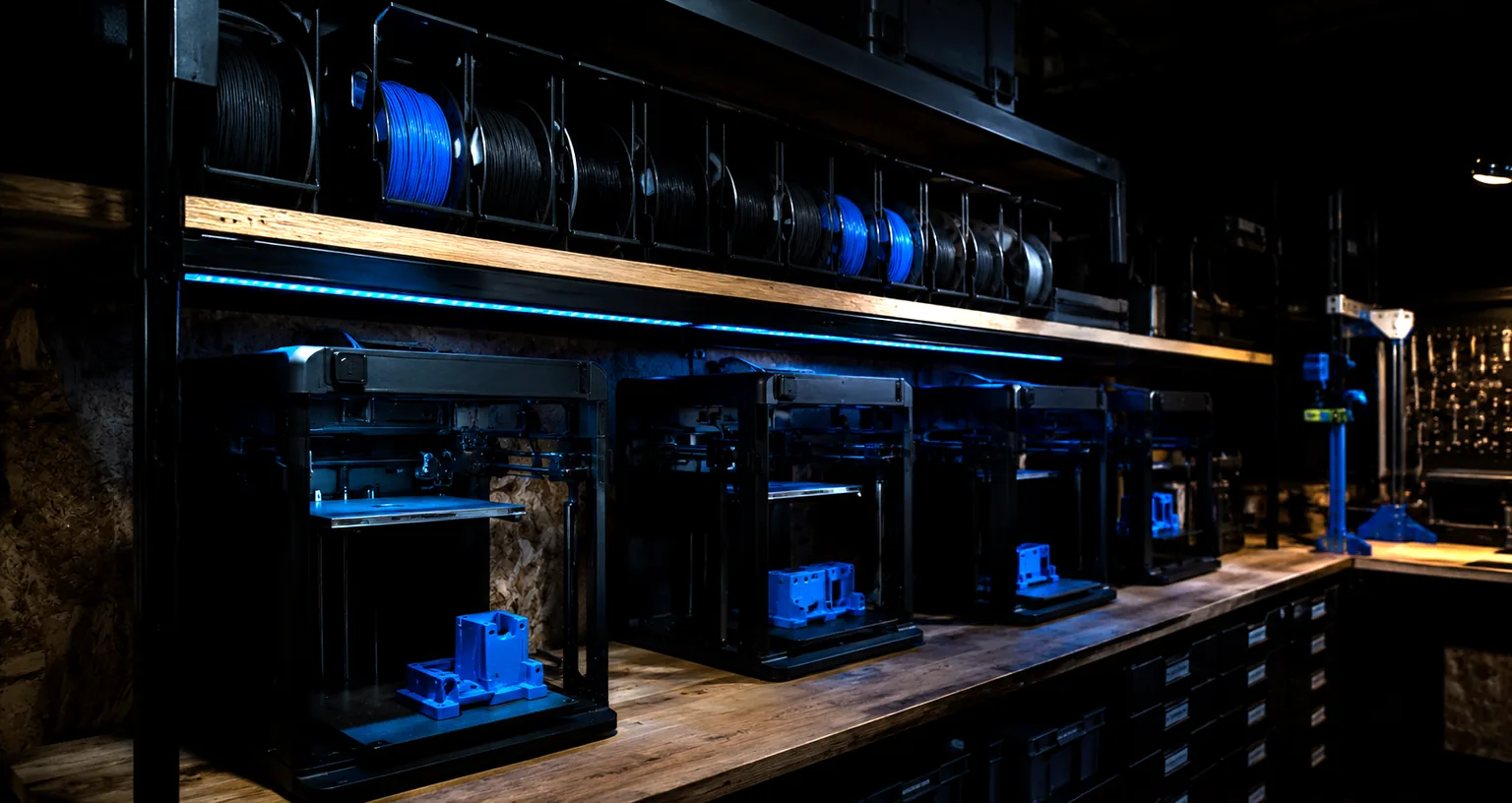
Osmoz 3D FDM printer farm in production
FDM · Fused Deposition Modeling

The most versatile 3D printing technology for technical plastic parts — the one we use for the majority of our industrial, prototyping and small-batch projects.

01Mechanical strength
02Choice of materials
03Large volumes
04Controlled costs

What we make with FDM 3D printing

Replacement and maintenance parts

A part breaks on a production line, the original supplier no longer makes it, and the sourcing lead time is incompatible with production. We manufacture the replacement from a file — or we model it from the original part.

Exemple : high-temperature ASA spacer for an industrial oven, delivered in 72h to restart a line.

Bespoke brackets and fixtures

Interface between two standard pieces of equipment, holding arm, inspection jig, sensor mount. Parts nobody sells because they are specific to your setup.

Exemple : camera mount for a robotic arm, in reinforced PETG, designed to fit an existing robot with no mechanical modification.

Technical housings and covers

Enclose an electronic board, an IoT module, a sensor, a measurement system — without going through plastic injection and its tooling lead times.

Exemple : protective housing for an on-board measurement system, with cut-outs for connectors and integrated fixings.

Functional prototypes

First iterations before validation, assembly tests, ergonomics checks. FDM lets you correct quickly and move to the next version without tooling costs.

Exemple : three versions of a spray nozzle in PETG, tested and validated on the line before ordering the production run.

Recurring small batches

Components ordered regularly in small quantities — spacers, clips, inserts, fixing elements. Not enough volume for a mould, too much volume for a one-off.

Exemple : batch of 100 PA (nylon) spacers for industrial equipment, replenished quarterly.

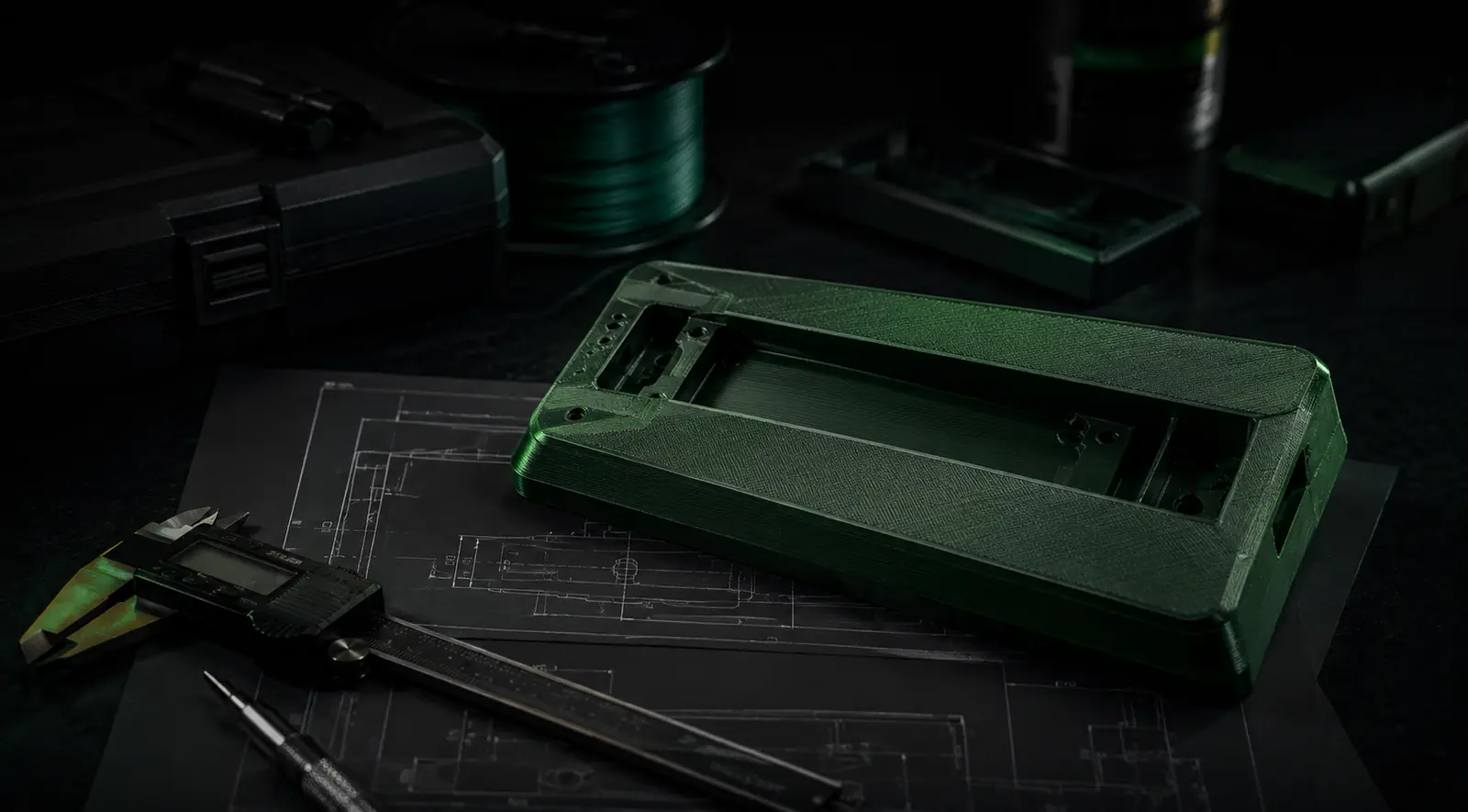
Industrial maintenance — part replacement

High-temperature ASA · bespoke design · line restarted in 72h

Choosing the right material for your constraint

From your constraints — temperature, load, environment — we choose the material.

MaterialMechanicalThermalUVChemicalFlexibilityPrintabilityCost
PLAPrototypageRigid · precise · economical
PCTGPrototypageTransparency · impact · food-safe
ABSIndustrieStrength · machinable · easy post-processing
PETGIndustrieVersatile · chemical · industrial standard
ASAIndustrieUV · weathering · ~95°C
TPUFlexibleFlexible · adjustable Shore · impact absorption
PA6 — Nylon 6Haute perf.Dynamic load · fatigue · moisture sensitive
PA12 — Nylon 12Haute perf.Impact absorption · dimensionally stable · less hygroscopic
PLA-CFHaute perf.Rigidity + light weight · structural prototyping
PETG-CFHaute perf.Rigid · chemical · reinforced industrial use
PET-CFHaute perf.Rigid · potentially food-safe · light
PA-CF / PAHT-CFHaute perf.Maximum strength · structural · high stress
PPA-CFHaute perf.Very high thermal resistance · demanding industrial
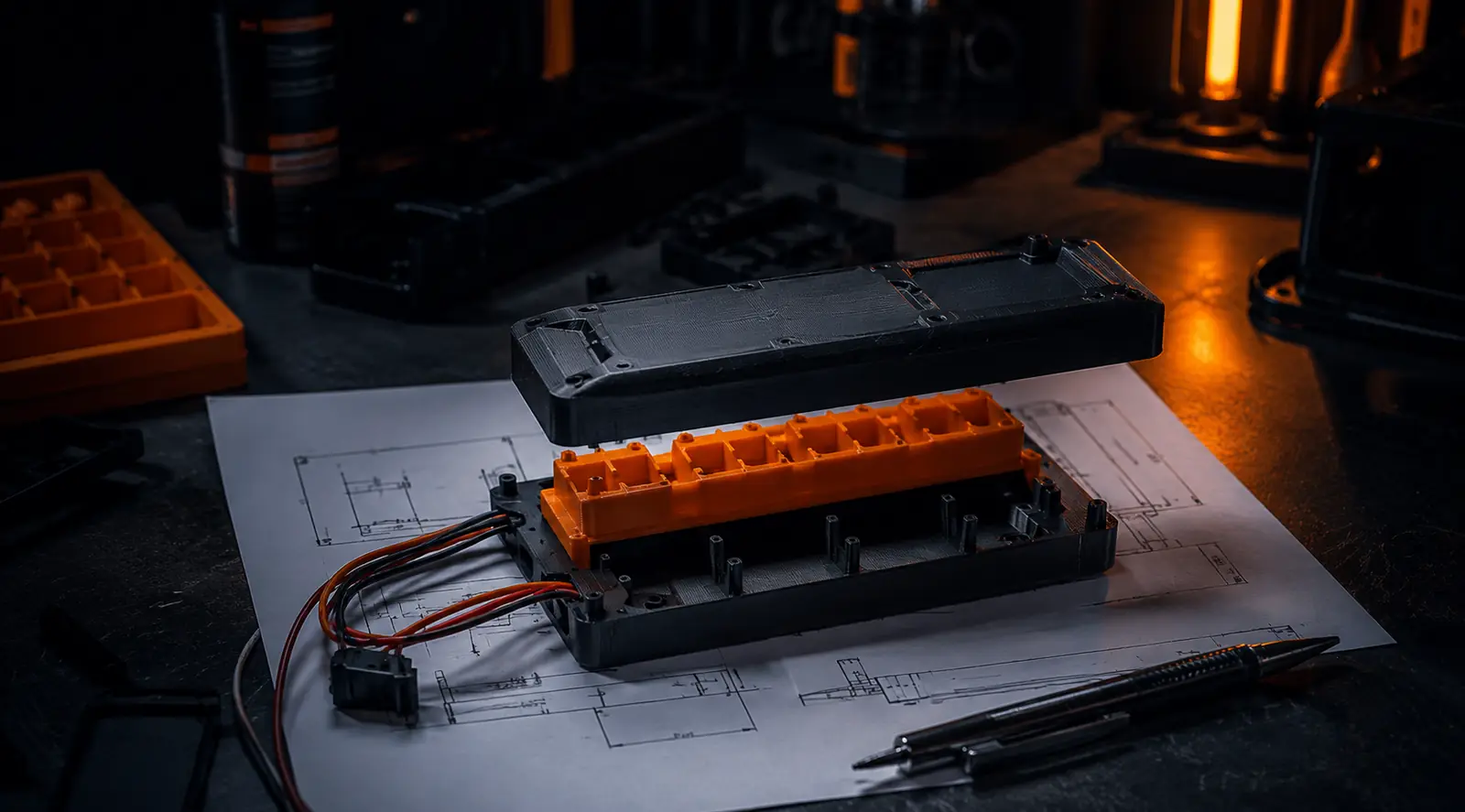
On-board electronics — bespoke protective housing

No tooling · no mould · 3 iterations in one week

Production capabilities

Max volume500 × 500 × 500 mmper print
Precision0.1 mm layers±0.2 mm standard tolerances
Lead times24 to 72hdepending on complexity and volume
Dual-materialsoluble supportcomplex geometries
Post-processingassemblyinserts · inclusions

FDM or SLA — how to choose

FDM printing

Fused filament · large part · volume

  • Mechanical constraints — load, vibration, impact PETG · PA
  • Thermal resistance ASA ~95°C PA ~110°C
  • Volume larger than 10 cm in one dimension
  • Flexibility TPU adjustable Shore
  • Controlled unit cost — small batch, replenishment

SLA resin

UV laser · fine detail · smooth surface

  • Details below 0.2 mm — fine geometries
  • Smooth surface without post-processing
  • Transparency or translucency required
  • Tight tolerances on small parts ±0.1 mm
  • Biomedical application certified resins

What we have printed

Commerce / Retail

Large-scale mascot for a national retail chain. A communications piece printed in FDM, post-processed and painted.

  • Material: PLA
  • Delivered within 10 days
  • Carefully finished result
Trades / Fit-out

Bespoke window cover to fill a non-standard cut-out. A part not available on the market, modelled from the dimensions provided.

  • Material: ASA (UV resistance)
  • From sketch to delivered part in one week
  • Recurring orders
Small business / Maintenance

Oil spray nozzle for a food production line. Original part discontinued, reproduced identically from the client's file.

  • Material: food-safe PETG
  • Reference kept in stock for fast reordering
  • Batch of 10 to 50 parts as needed
Industry / Tooling

Dimensional inspection jig for a fitting workshop. Part made from the assembly drawings, used in daily production.

  • Material: rigid PETG
  • Tolerance ±0.2 mm
  • Replaced within 48h if worn
Furniture / Fit-out

Furniture cover to clad a metal structure in a commercial fit-out project. Run of 80 identical parts.

  • Material: PLA
  • Colours on request
  • Delivered as a single batch
Individual / Craftsperson

Broken cheese-churn part — reproduced from the original brought into the workshop. A single unit, delivered in 3 days.

  • Material: food-safe PETG
  • Modelling included
  • Order from 1 part

Frequently asked questions about FDM 3D printing

What dimensional tolerances can FDM achieve?
As standard, ±0.2 mm on critical dimensions. With fine tuning and a stable material (PETG, ASA), we can reach ±0.1 mm. For tighter tolerances, SLA is better suited.
Is FDM suitable for parts in food contact?
Some materials are compatible (certified PLA, food-safe PETG), but the layered structure creates micro-gaps that are hard to clean. For regular food use, we steer towards a food-safe SLA resin or a suitable post-processing treatment.
What temperature resistance does each material offer?
PLA: ~60 °C. PETG: ~80 °C. ASA: ~95 °C. PA: ~110 °C. Carbon-fibre PA: ~150 °C depending on grade. Specify your target temperature in your request.
Can flexible parts be printed in FDM?
Yes. We print in TPU with different Shore hardnesses. Seals, dampers, gripping elements, impact-absorbing parts — TPU covers the majority of flexibility needs.
Do I need a 3D file to order?
An STL or STEP file is ideal. Without a file, we can model from a dimensioned drawing, a sketch or an existing part to be reproduced.
What is the difference between FDM and SLA for a technical part?
FDM (fused filament fabrication) deposits fused filament layer by layer — mechanically stronger, more material choice, suited to large parts. SLA cures resin — more precise, better surface quality, limited in volume. The choice depends on the priority constraint.
Is FDM suitable for small batches?
Yes. With no tooling, the unit cost stays controlled up to a few hundred parts. Beyond that, plastic injection generally becomes more competitive.
What is the maximum size in a single print?
500 × 500 × 500 mm. Beyond that, we print in several parts and assemble — to be assessed according to the geometry and mechanical constraints.