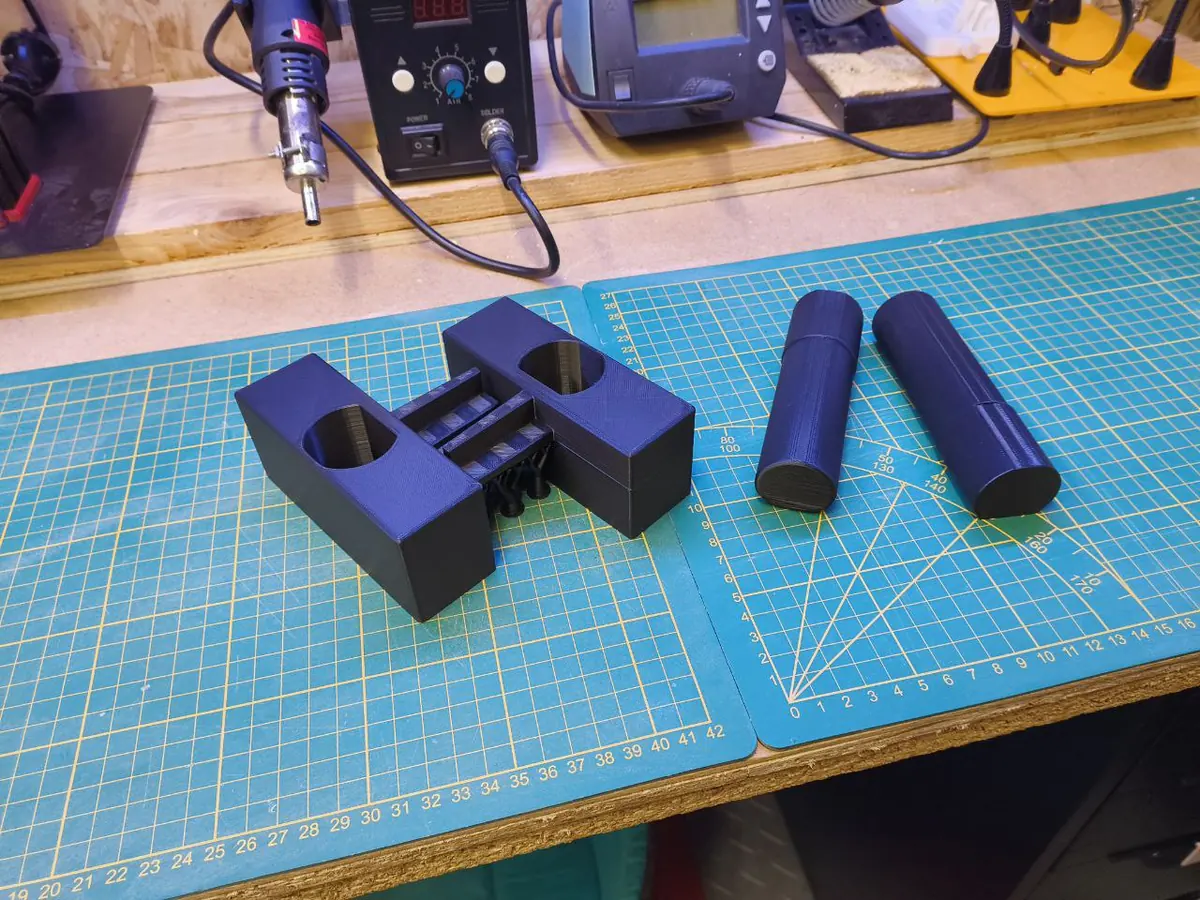
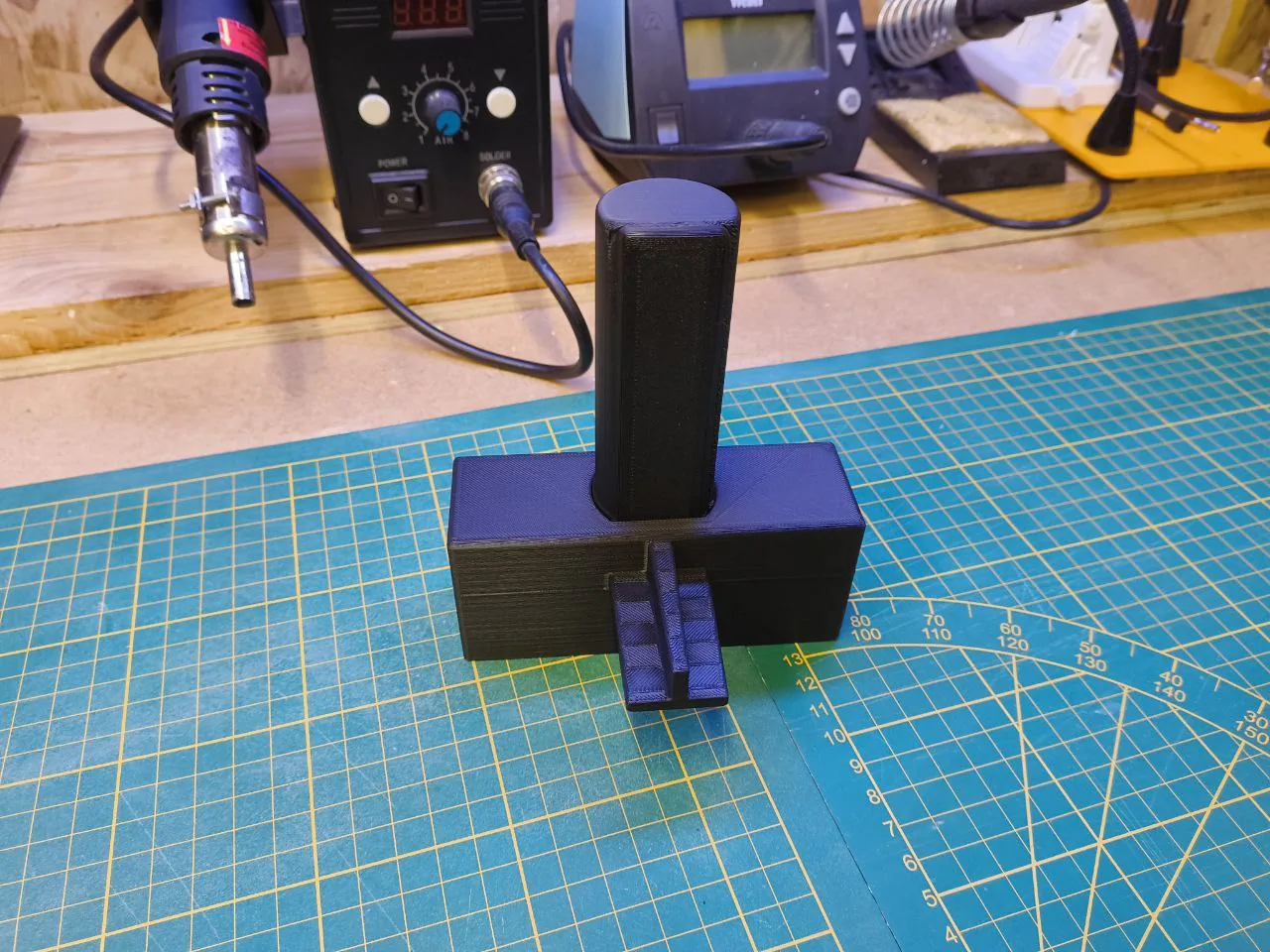
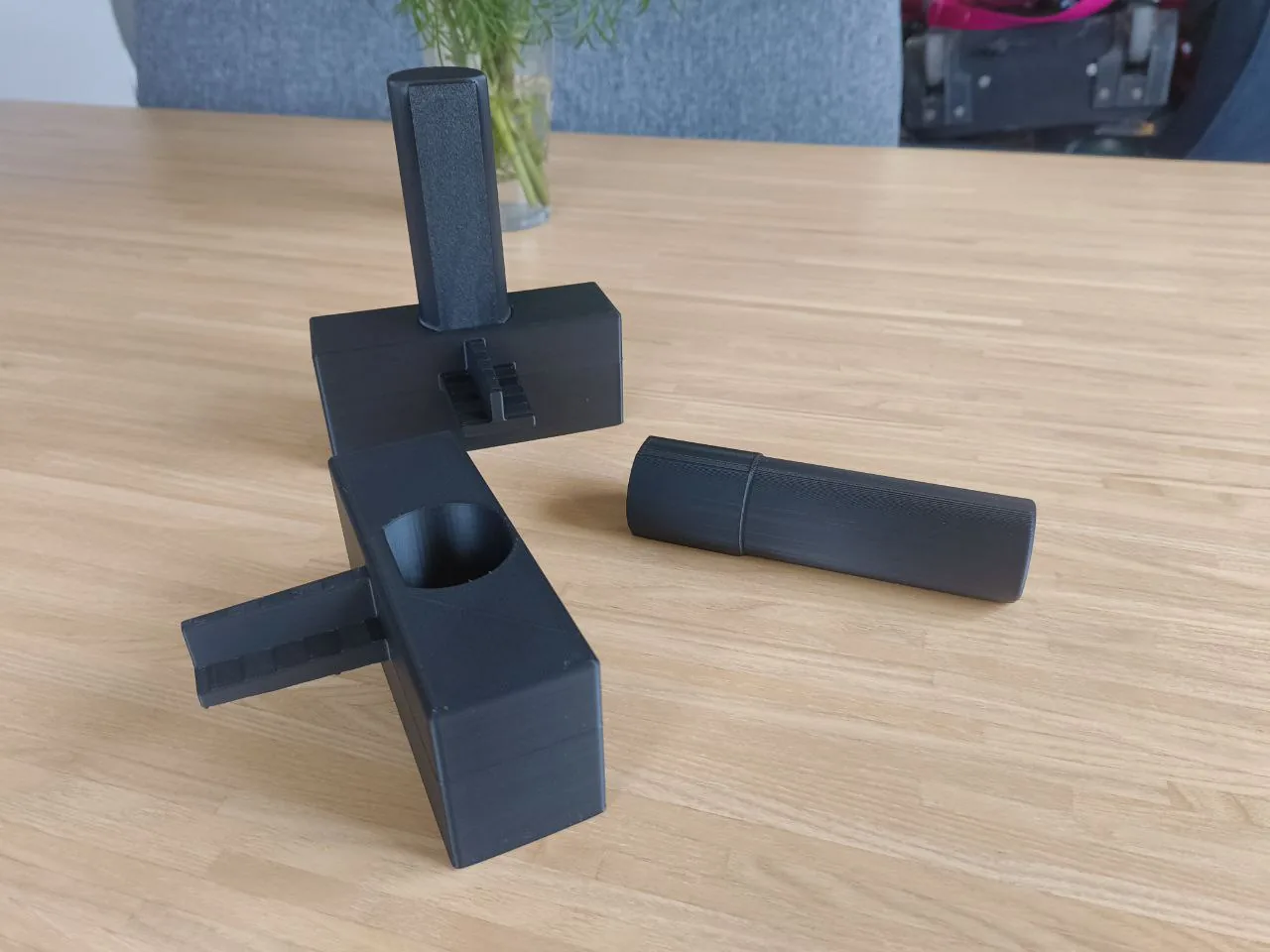
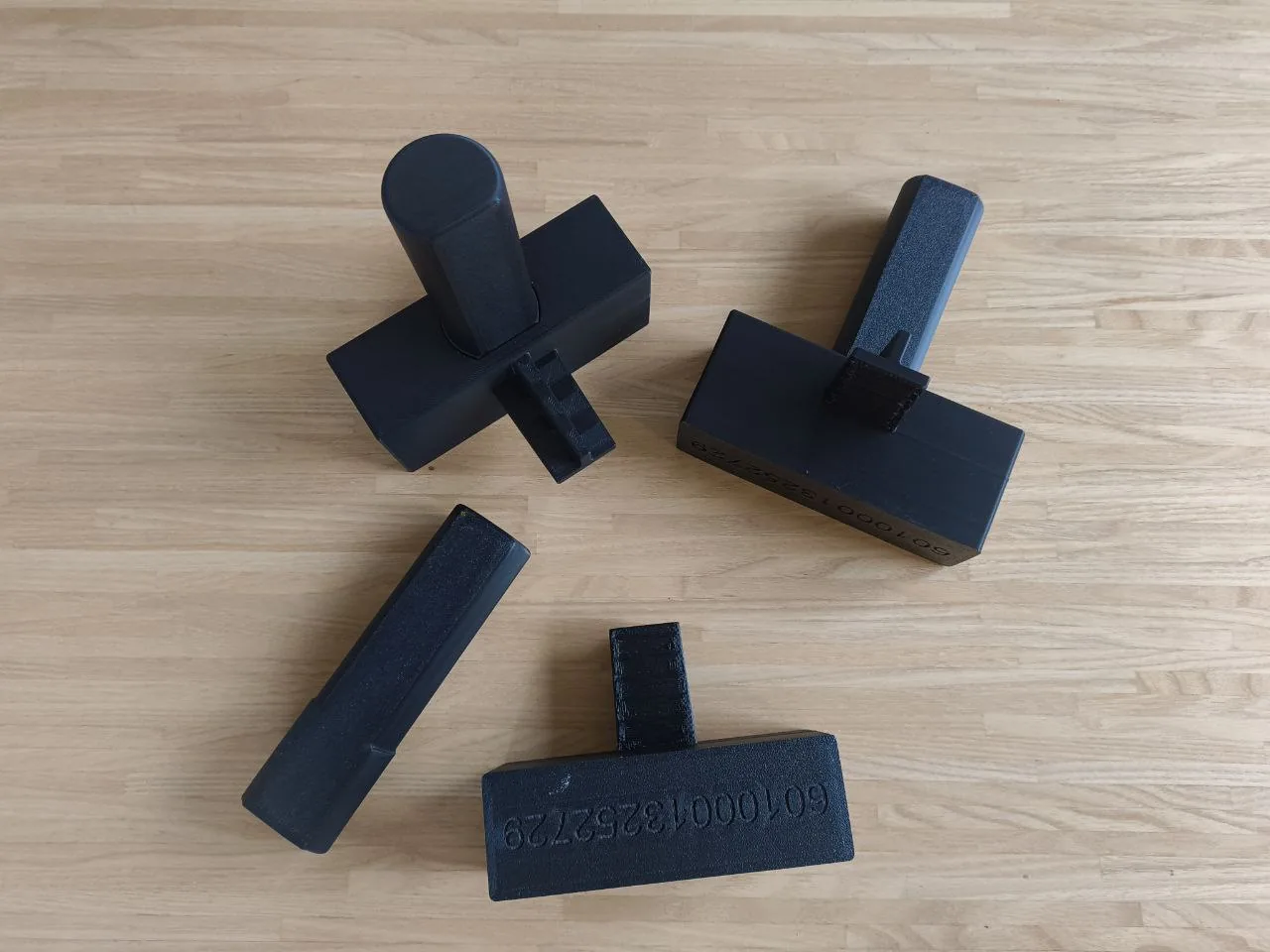
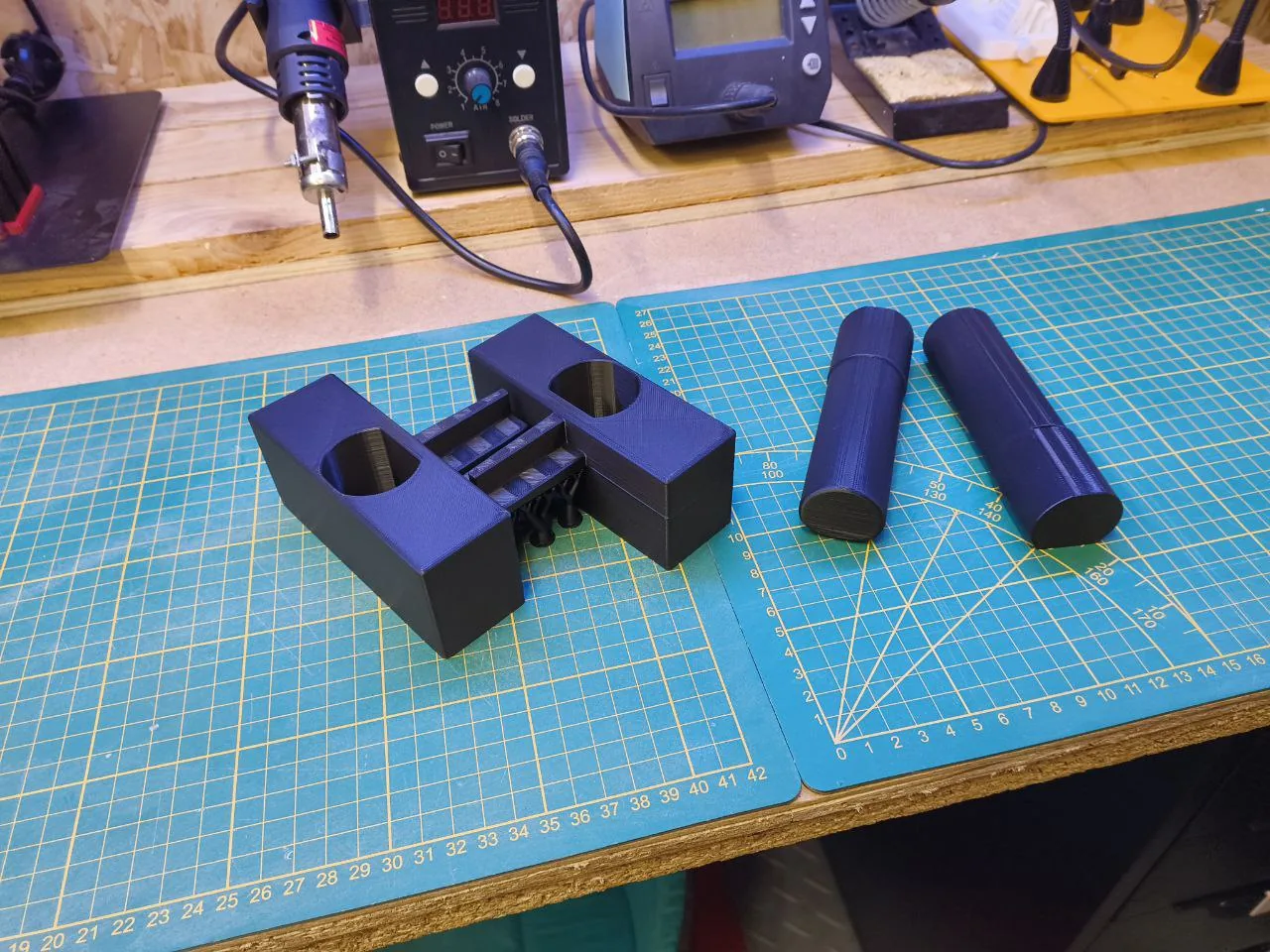
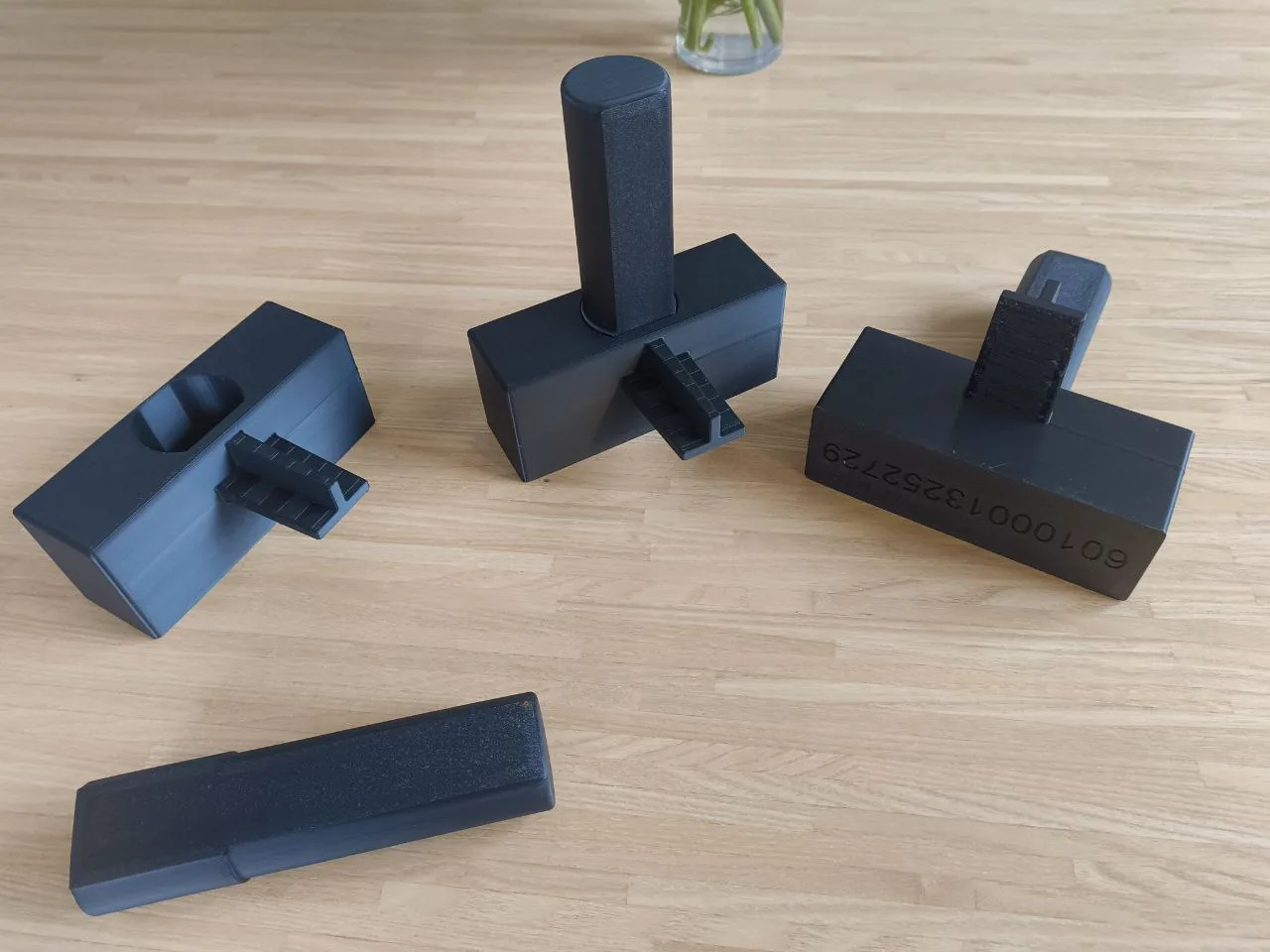
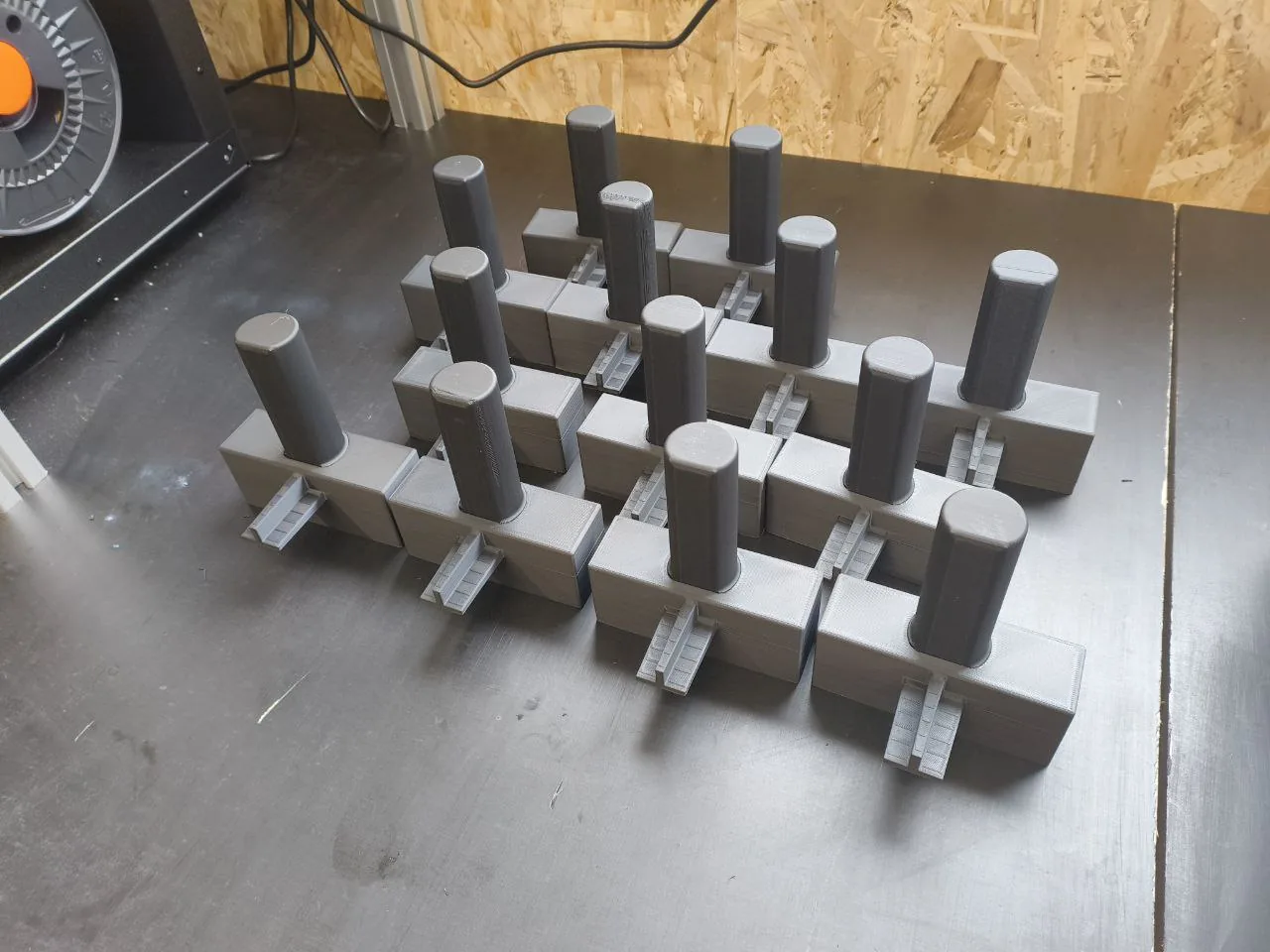
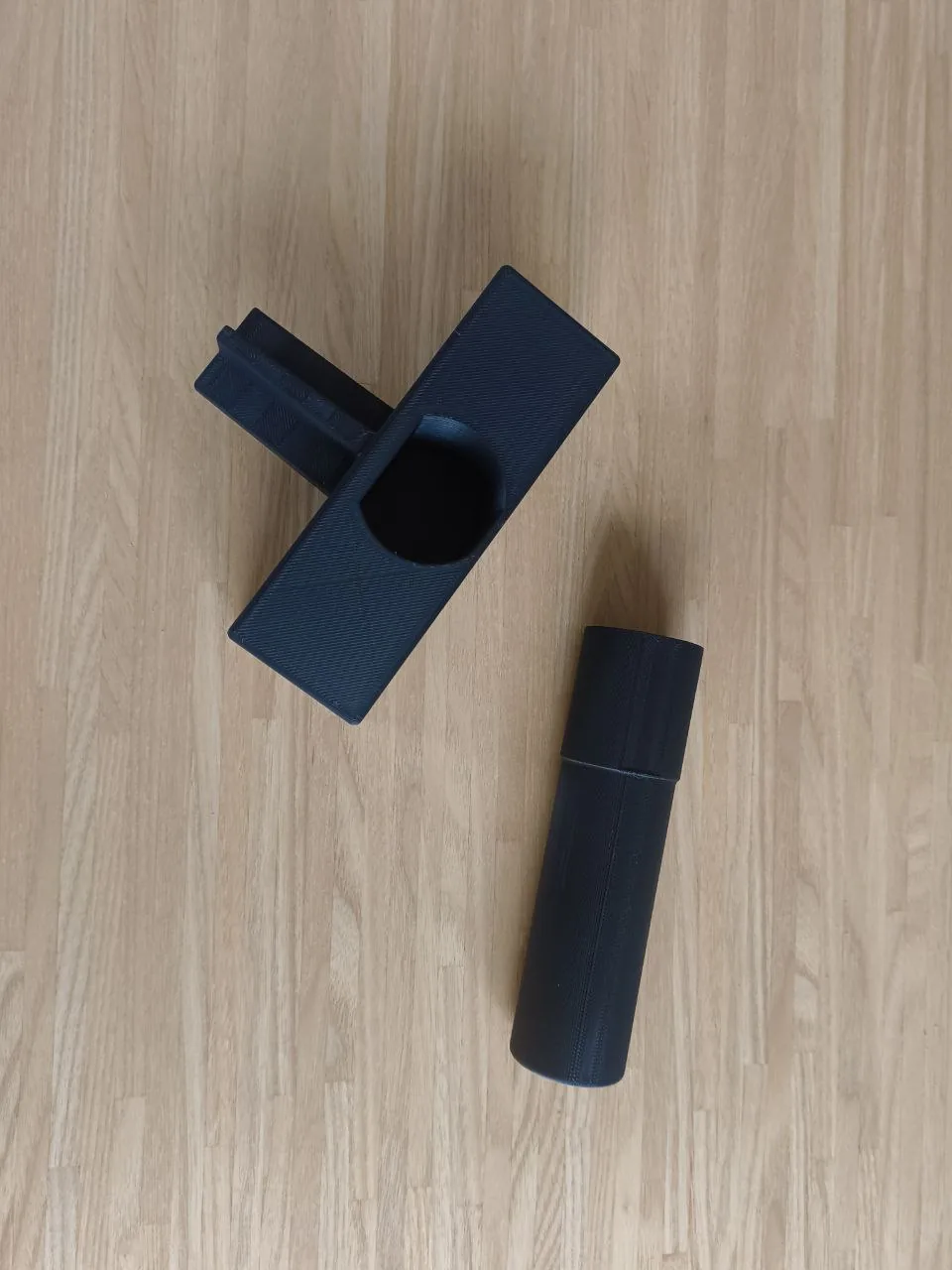
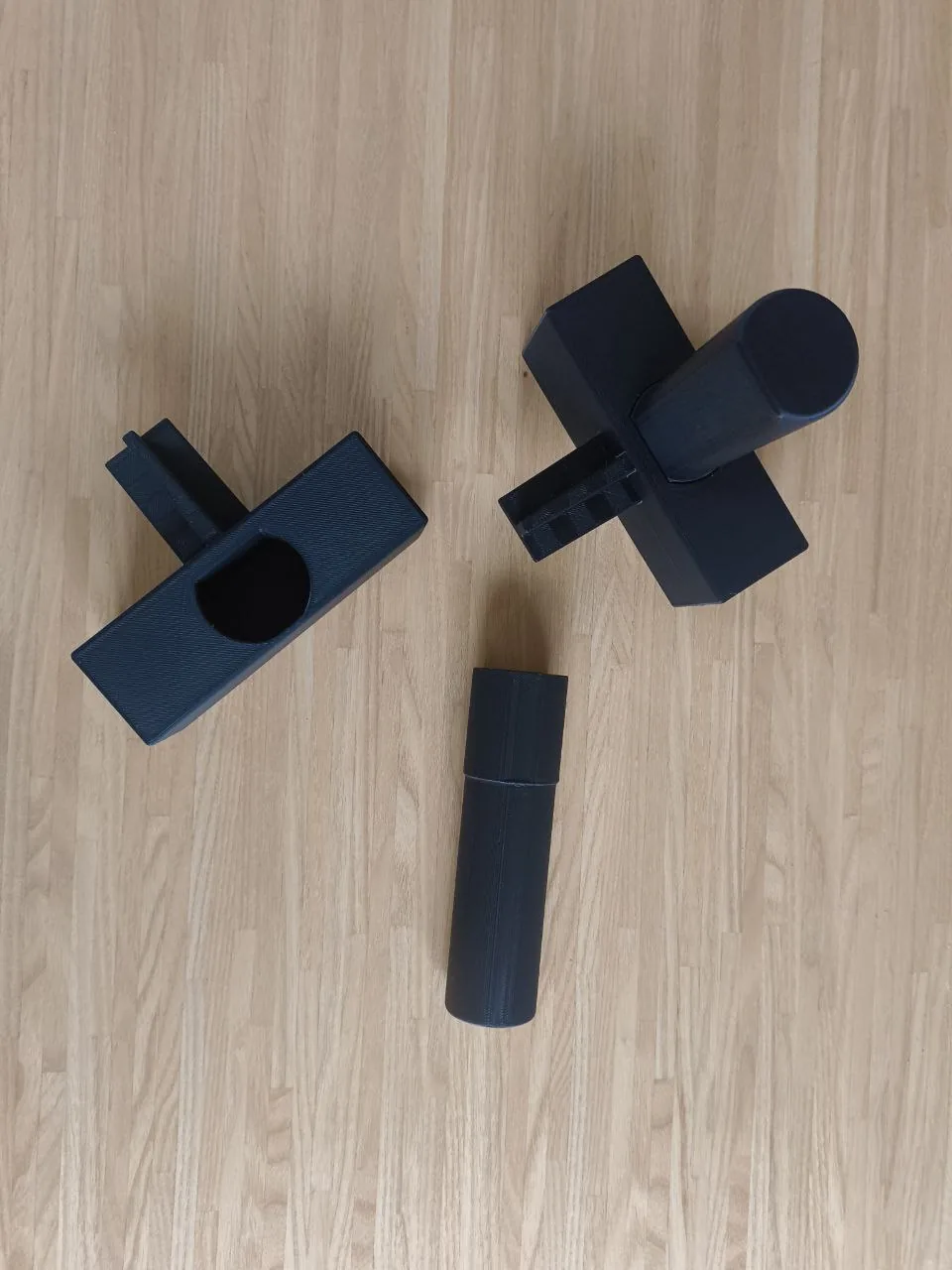
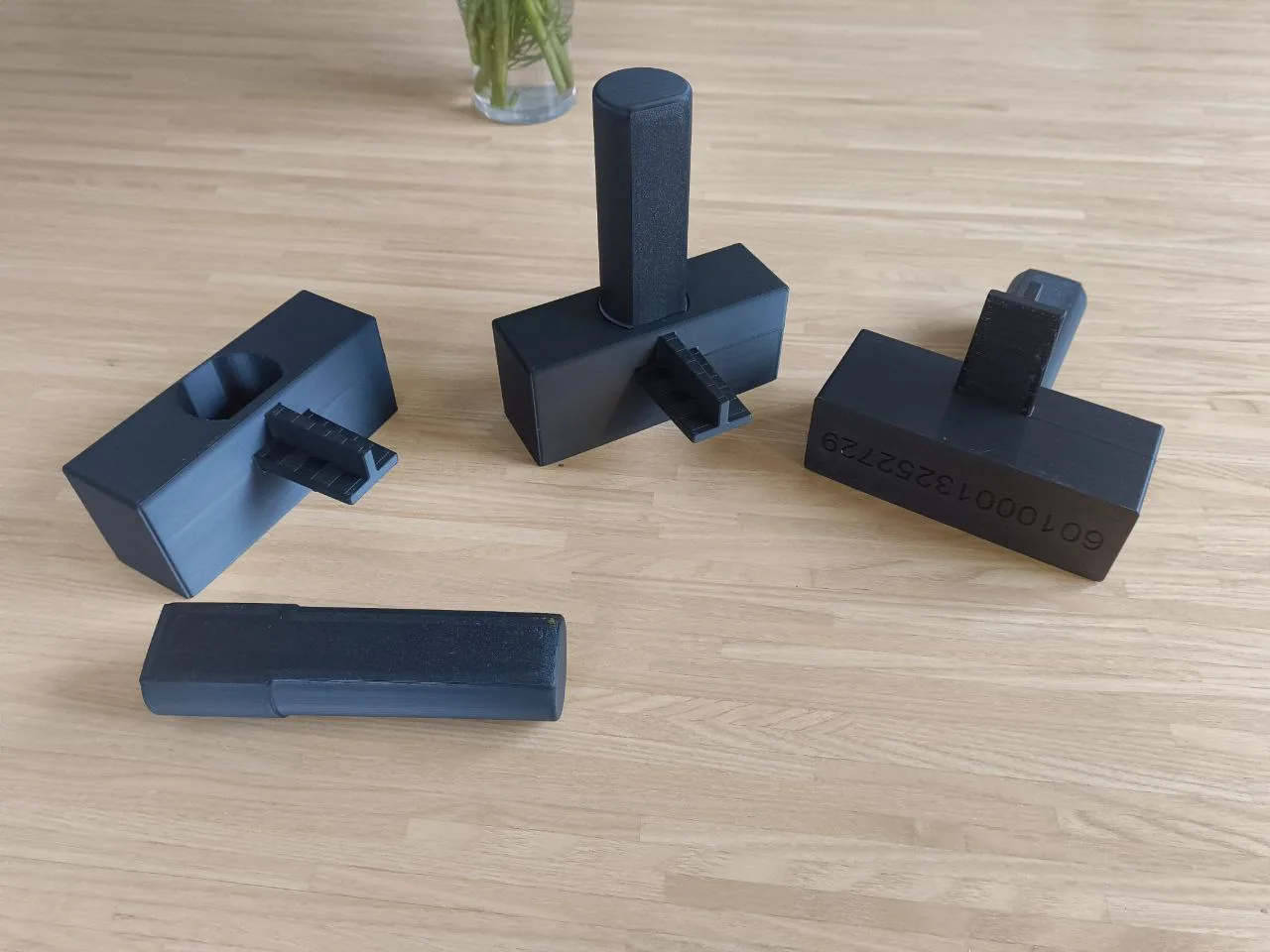
Reproducing a shim from an oven production line, with more robustness and in a small batch, locally. We restructured the model into two components joined by a press fit (rather than gluing), in Ariane Plast PLA+. Validated for strength, it went on to several successive batches.
The client wanted to reproduce a shim used in an oven production line, based on an existing model. The aim was to obtain a part that was functional, strong and reproducible in a small batch, with a preference for short lead times and local manufacture.
2
The need
The client provided us with a workable 3D file, along with the drawings. Our first task was to add the part reference to it, to make production tracking easier. Several tests were then carried out to identify the best material + print-orientation combination, taking usage constraints into account:
Ariane Plast PLA+ was selected for its solid mechanical properties and its printing stability.
The part had to withstand forces applied in two directions, which quickly exposed the limits of the single-piece version, weakened by the layer direction.
3
Our goal
The goal was to guarantee sufficient strength for use in an industrial environment, on a production line. The first prints revealed a mechanical weakness tied to the layer direction: the part failed under certain loads. We therefore:
Reworked the design to offer a two-part version, assembled at a crossed angle.
Ran in-house strength tests (impacts and pressure) to validate the new configuration.
Made sure the assembly was reproducible, without any loss in mechanical performance.
The highlights of the project
1
First manufacturing tests
The original part let us start trials quickly, but the first prints revealed a critical point: the force applied to the shim came from two different directions, and the print-layer orientation made the part fragile along one of the axes. We therefore launched several tests:
material choice: Ariane Plast PLA+ offered the best compromise between strength and print quality,
a first single-piece version printed to check compatibility with the existing assembly,
an in-house strength test simulating mechanical impacts to assess durability.
2
Adapting the model and the final print
Following the initial tests, we revised the model to move to a two-part design, engineered specifically to improve strength along the two stressed axes. This change was essential to meet the mechanical constraints of the production line. The technical choices we made:
revising the 3D model to integrate a reliable assembly system,
dropping the glued assembly in favour of a press fit, which is faster, cleaner and stronger,
fine-tuning the print parameters to ensure consistent quality across the whole batch.
3
Result and continuation of the project
The new version of the shim proved its strength and reliability in the field. The client validated the performance and ordered several successive batches, proof that the solution met the production line's real-world needs. For us, the project was an opportunity:
to strengthen our ability to adapt models to real mechanical constraints,
to optimise our own production processes (notably with press-fit assembly),
to build a long-term partnership with a demanding industrial company.
Conclusion
Rethinking the part to make it reliable
Rather than copying, we restructured the shim into two press-fitted components to gain robustness. Validated in the field, it led to regular repeat orders.
In pictures
The project in pictures
A similar project to bring to life?
Tell us about your need — we'll get back to you with a recommendation and a quote.