
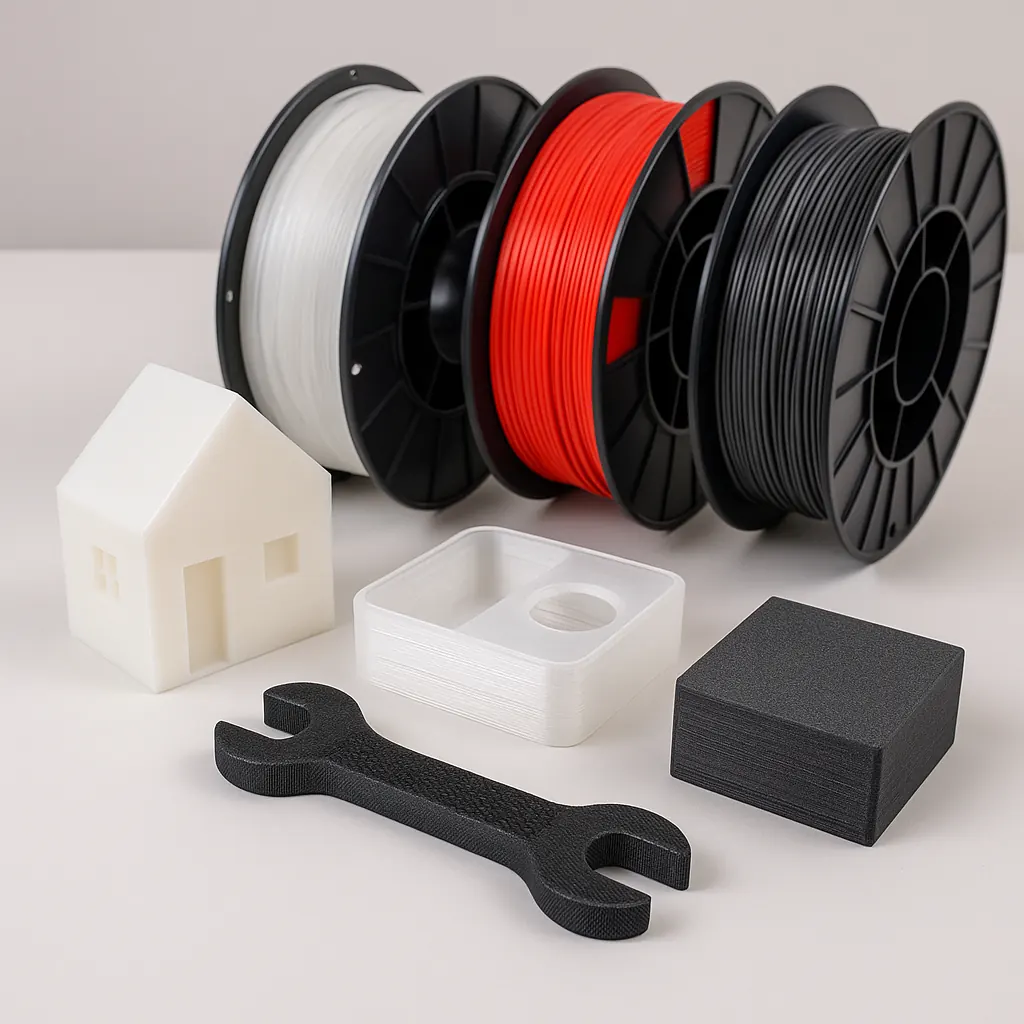
3D printing, in brief
Additive manufacturing builds an object layer by layer from a digital model: rapid prototyping, customisation, on-demand production. Three main technologies: FDM (thermoplastic filaments), SLA / resin (light-sensitive resins), SLS (powders).
Why the material is decisive
It directly influences the mechanical, thermal and aesthetic properties of the part. Choosing it well means guaranteeing the strength, flexibility, durability and appearance you expect.
The main families of materials
- Plastics — PLA (bio-sourced, easy), ABS (heat/impact-resistant), PETG (a compromise)
- Flexibles — TPU / TPE: seals, soles, protective shells
- Filled filaments — carbon fibres for rigidity
- Metals — complex and resistant parts (aeronautics, medical, tooling)
Choosing your filament: the criteria
- Compatibility with the printer
- Required mechanical properties (tensile strength, flexibility, heat resistance)
- Aesthetic appearance (colour, finish)
Materials by sector
Medical: bespoke surgical guides, customised prostheses. Industry / manufacturing: specific tooling, on-demand spare parts, functional prototypes.
In summary
The choice of material is a decisive step. We support you from the project to the final manufacturing — describe your need and we will advise you.
Going further: we help you choose the material for your bespoke small run.