
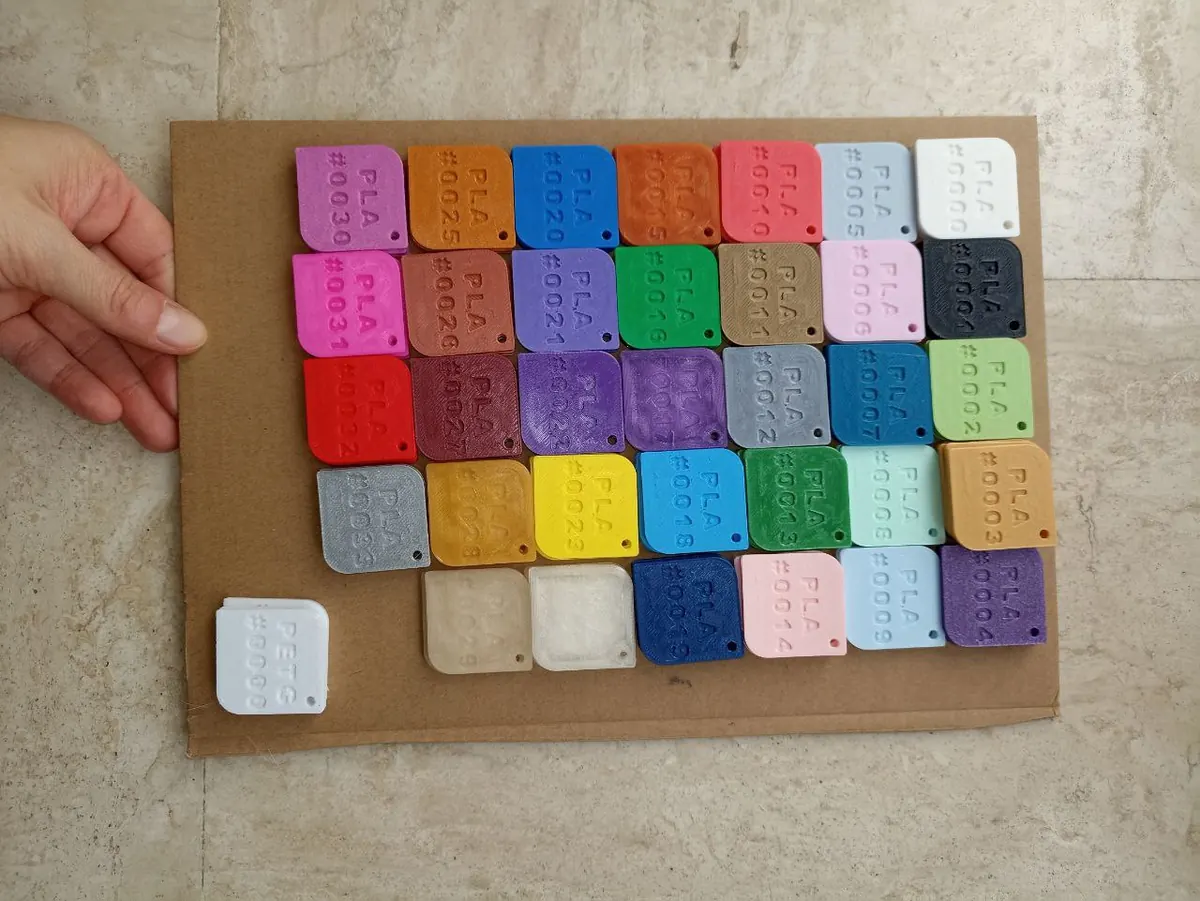
Why the choice of filament is essential
The filament determines the final properties of the part:
- Mechanical strength and flexibility
- Heat resistance
- Appearance (matt / glossy, opacity)
- Production cost
- Ease of printing and settings required
1. PLA — simplicity and low cost
The most accessible filament to get started: ease before performance. Advantages: simple printing without a heated bed, smooth finish, bio-sourced material, low price. Limits: mechanical fragility, low heat resistance. Ideal for: mock-ups, visual prototypes, proof of concept.
2. PETG and PCTG — robustness and impact resistance
PETG: a good compromise, impact-resistant, reliable adhesion, possible food-contact compatibility. PCTG: more technical, high transparency, very high impact resistance. Ideal for: enclosures, semi-transparent containers, simple mechanical parts.
3. ABS — strong and heat-resistant, to be handled with care
Advantages: excellent mechanical and heat resistance (up to 100 °C), durability. Limits: warping, odorous emissions, complex settings. Ideal for: technical parts under stress, objects exposed to heat, industrial contexts.
4. TPU and PA — flexibility or technicality
TPU: elastic, non-slip, resistant to abrasion and oils → seals, grips, flexible shells. PA (nylon): robust, wear-resistant, slightly flexible, hygroscopic → gears, fixings, moving parts.
Fibre-filled materials
Reinforced filaments (carbon, glass): extreme rigidity, reduced weight, raw industrial look. Note: they quickly wear out standard nozzles (prefer hardened steel) and require good settings. Ideal for: structural supports, technical prototypes, “carbon look” objects.
In summary
Choosing your filament means matching each project to its constraints. In doubt? We will advise you — describe your need and we will reply with a quote.
Read also: to produce at volume, see our low-volume production service. The main material families are detailed on thermoplastics.