
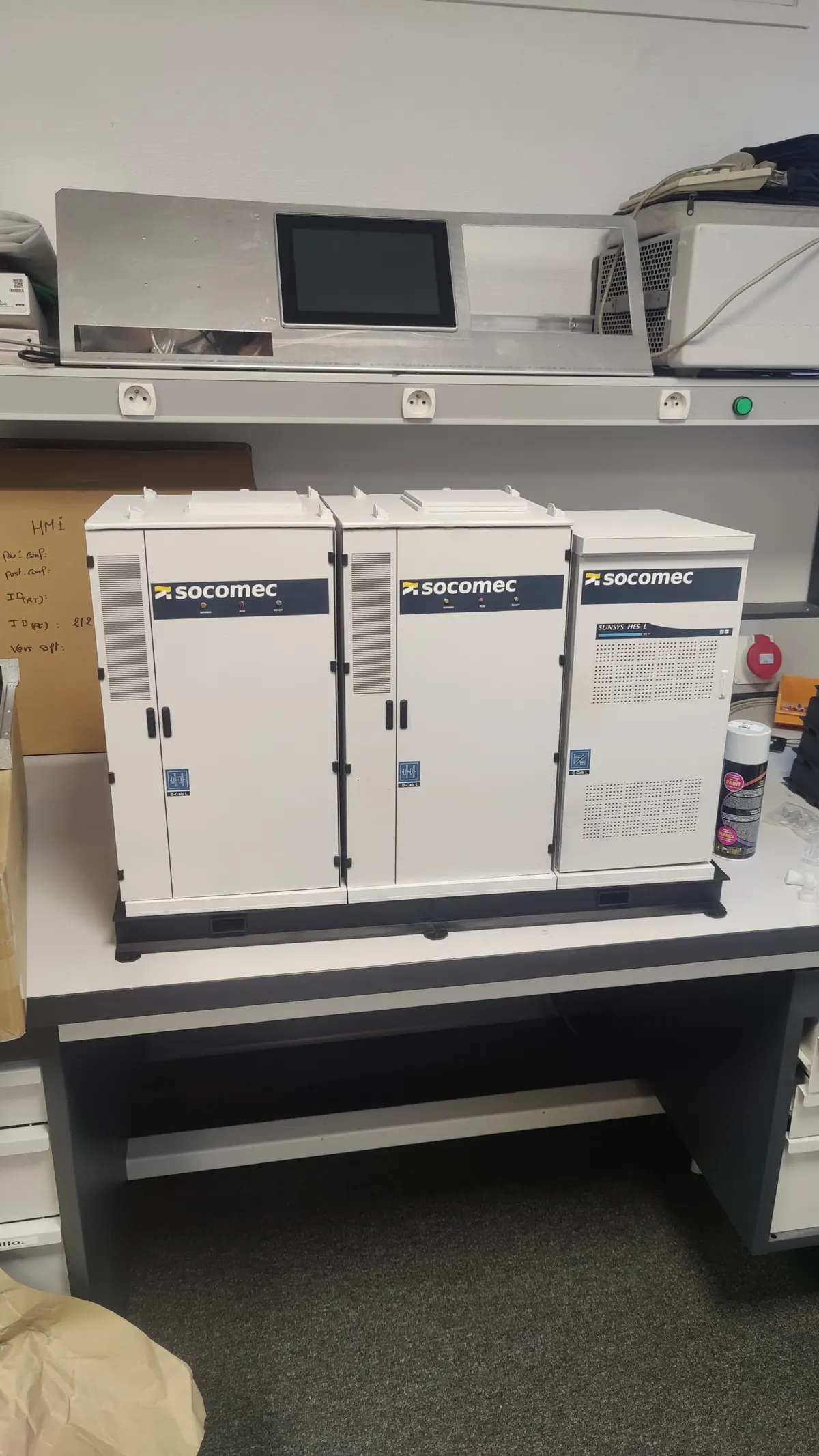
Defining the objective clearly
Presentation, teaching, technical simulation or integration into a project: the intended use determines the level of detail, the materials and the finishes. Also choose the level of realism — a simplified model (volumes) or a faithful one (exact scale) — striking a balance between aesthetics and handling strength.
Working the model for printing
- Think about the final scale: below 0.6 mm, some elements disappear (0.4 mm nozzle, walls thinner than 1 mm are difficult)
- Simplify details that cannot be printed, add invisible reinforcements
- Break it into modules if it is too complex (assembly with tenons, magnets, clips)
Optimising the file before sending
Format: STL for a ready model, STEP / 3MF to allow adaptations and checks. Correct the common errors: no open faces, merged volumes, consistent scale (millimetres). Useful tools: Meshmixer, 3D Builder, Netfabb.
What we can adapt for you
If the file is good but poorly optimised: orientation, splitting, supports, material advice. If it cannot be used: we remodel from drawings, sketches or CAD files. A well-prepared scale model does the project justice — we support you from analysis through to the final print.
Going further: move on to manufacturing with our 3D prototyping. The exchange format: the STL format.